Quick insights – Tick repellent vs mosquito repellent test
- Tick repellent vs mosquito repellent test methods differ because ticks crawl and attach, while mosquitoes fly and bite.
- Mosquito repellent tests commonly include Arm-in-cage test, tunnel test and field tests.
- Tick repellents are commonly tested using attachment assays and crawling behaviour studies against species such as Ixodes ricinus and Rhipicephalus sanguineus.
- Mosquito repellent tests mainly measure landing inhibition, bite prevention and complete protection time (CPT).
- Choosing the correct test method is essential for generating reliable performance claims and regulatory support.
Summary
The testing approach used in tick repellent vs mosquito repellent tests depends on the behavior of the target organism. Mosquito repellent tests focus on landing and biting prevention while tick repellent tests primarily assess crawling deterrence and attachment prevention. Understanding tick repellent vs mosquito repellent testing helps to accurately evaluate their product performance against crawling ticks and flying mosquitoes, further the right efficacy test for their sprays, textiles, pet products, and similar formulations.
Why tick and mosquito repellent testing require different evaluation methods
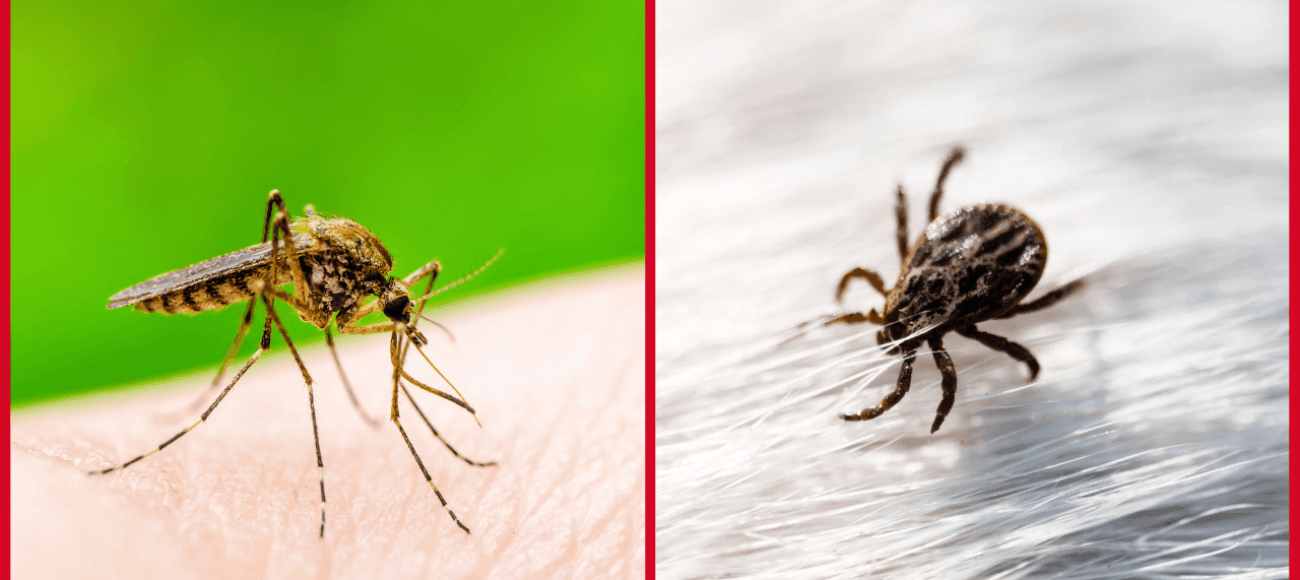
While comparing tick repellent vs mosquito repellent, it is important to understand that ticks and mosquitoes interact with hosts in fundamentally different ways. Their movement patterns, feeding behaviour and host-seeking mechanisms directly influence how repellency performance is measured.
Mosquito behaviour:
- Mosquitoes are active flying insects that locate using biologicals signals such as carbon dioxide, body heat, skin odor and moisture
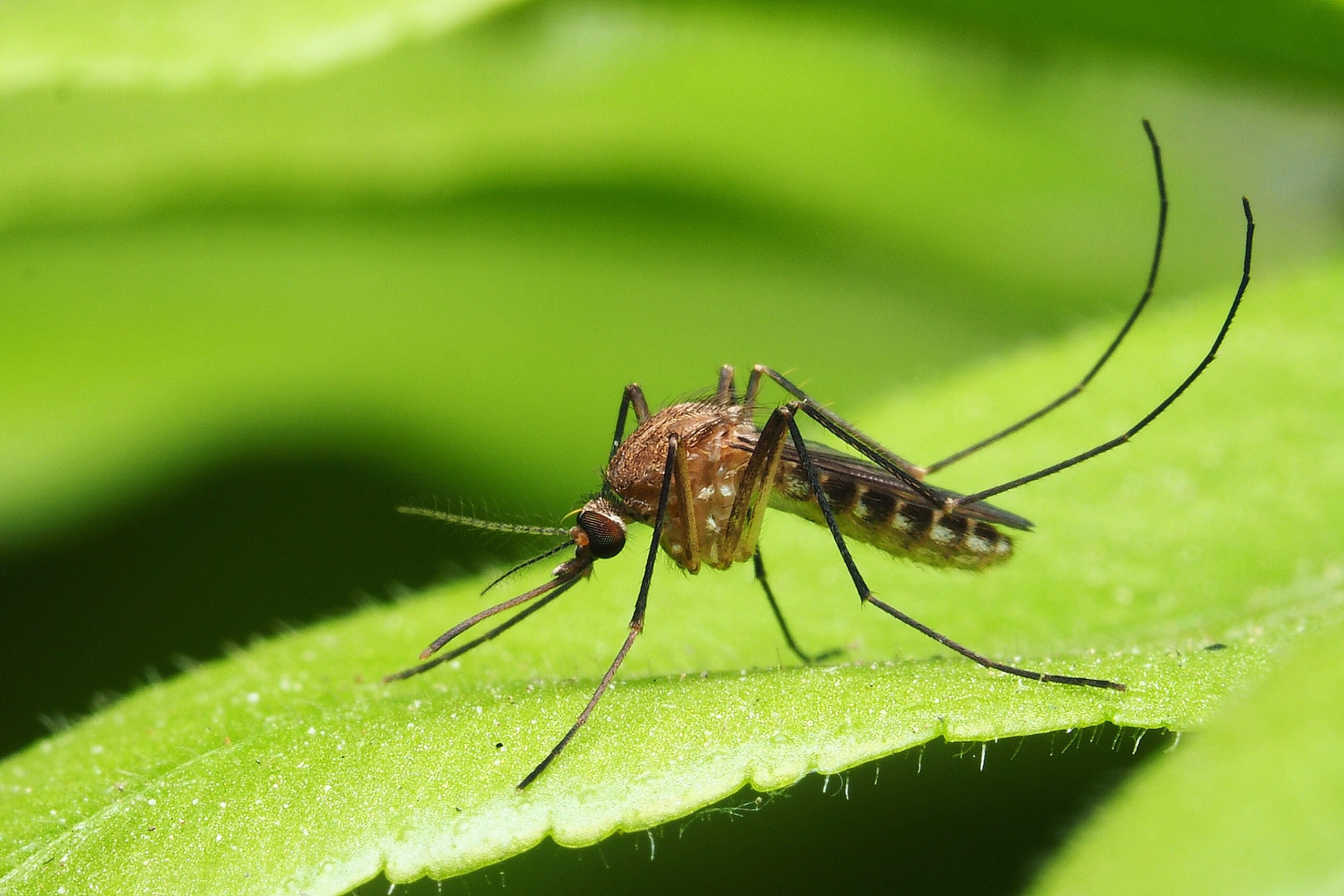
- Species such as Aedes aegypti, Anopheles stephensi and Culex species actively fly toward hosts before landing and feeding.
- Because of this behaviour, mosquito repellent test evaluate landing frequency, blood-feeding behaviour, biting inhibition and complete protection time (CPT)
Tick behaviour:
- Ticks do not fly or rapidly approach hosts, instead, they crawl, climb and attach to hosts for prolonged feeding
- Their interaction is influenced by host contact, climbing movement, attachment response and surface retention
- Hence, tick repellent testing evaluates tick movement, crossing behaviour, attachment prevention and repellency percentage over time.
Interesting read – How Climate Change Influences Lyme Disease in Europe
Key differences – Tick repellent vs mosquito repellent testing
| Parameter | Tick repellent testing | Mosquito repellent testing | ||
| Pest behaviour |
| Assesses flying, landing, and biting behavior | ||
| Test methods |
|
| ||
| Target species | Ixodes ricinus, Rhipicephalus sanguineus | Aedes aegypti, Anopheles stephensi and Culex species | ||
| Typical exposure period | Longer observation periods | Shorter exposure periods | ||
| Scope of products | Animal-use – Collars, sprays, powders, impregnated fabrics, tick combs etc Human-use – Skin sprays, lotions, roll-ons and wipes, shampoos | Topical repellents such as creams, lotions, spray formulations, impregnated textiles. Insecticide-treated materials such as bed nets, wall paints etc. | ||
| Key endpoint measured | Repellency and attachment reduction | Bite prevention and landing reduction |
Common mosquito repellent testing methods
Several standardized methods are used in mosquito repellent tests.
Arm-in cage test:
The Arm-in-cage test is a globally recognized method used to evaluate the efficacy of mosquito repellents intended for human use by assessing the mosquito landing and bites under controlled conditions.
In this method, a volunteer’s treated forearm is exposed to host-seeking mosquitoes inside a cage, and mosquito landing and biting activity is observed.
Commonly tested products under Arm-in-cage:
Arm-in-cage is applicable to topical repellents such as-
- Creams
- Lotions
- Spray formulations
- Impregnated textiles
Main parameters evaluated:
Complete protection time (CPT) – CPT is the duration between repellent application and the first confirmed bite. This can be defined based on either the occurrence of two or more bites on the treated arm or a bite followed by another within 30 minutes. Longer CPT indicates higher effectiveness of repellents.
Room Test:
Room test is used to evaluate the effectiveness of mosquito repellent products under indoor conditions that simulate real-world use conditions. This method assesses how well a product performs within a larger enclosed space where mosquitoes can move naturally.
Scope of products for testing
It is commonly used for
- spatial repellents
- vaporizers
- coils, sprays
- and aerosol product.
Main parameters evaluated
- Mosquito landing reduction
- Bite inhibition
- Knockdown activity
Common tick repellent testing methods
Tick repellents products are designed separately for humans and animals and hence require different testing methods.
1. Test for animal tick repellent products
This test is used to evaluate the efficacy of animal-use tick repellent products by observing tick movement, repellency behaviour and attachment prevention on treated animals under controlled laboratory conditions. The method assesses how effectively products prevent ticks from crossing treated areas or attaching to the animal’s skin or fur.
Test is applicable to animal-use tick repellent products such as:
- Sprays, powders, shampoos, wipes
- Collars, impregnated fabrics and textiles
- Tick coms, repellent massage oil and drops
Main parameters measured:
- This test records tick behaviour, locomotive status and adverse skin reactions
- Efficacy is determined by the percentage of repellency calculated over the total study duration.
2. Test for human tick repellent products
This test evaluates human-use tick repellents by applying the product to a volunteer’s arm while the opposite untreated arm serves as control. Ticks are released below a designated crossing zone and observed to determine whether they cross into the treated area or are repelled.
This test is applicable to human-use tick repellent products such as:
- Skin sprays and lotions
- Roll-ons and wipes
- Shampoos
Main parameters measured:
- This test evaluates efficacy based on calculation of total percentage repellency over time
- It continuously monitors for any adverse skin reactions throughout the study to ensure volunteer safety.
3. Mouse feed test for insecticide-treated materials (Animal and human use)
The mouse feed test evaluates repellency treated materials using a swiss albino mouse (Mus musculus) as a heat attractant for ticks. Treated and untreated fabrics are compared to determine how many tick repelled from the treated material over defined time intervals.
This test is applicable for insecticide-treated materials such as fabrics, textiles etc for both animal-use and human-use.
Main parameters measured:
- Repellency is evaluated by counting the number of ticks on treated vs untreated in pre-defined intervals.
4. Tick attachment test (Insecticide treated materials for human and animal use)
The tick attachment test evaluates the ability of the treated fabrics to prevent ticks from attaching to textile surfaces. Ticks are introduced onto treated and untreated fabrics placed vertically, and their attachment behaviour is compared over a specified observation period.
This test is applicable to treated textiles, anti-tick fabrics used for both animal and human use.
Main parameters measured:
- This test evaluates the efficacy by comparing the reduction in ticks on treated fabrics vs untreated fabrics.
Products requiring both tick and mosquito testing
Some repellent products are designed to provide protection against multiple biting arthropods, including both ticks and mosquitoes. Such products therefore require both mosquito and tick validation studies. Some of the products include:
- Outdoor performance clothing
- Camping and hiking apparel
- Multi-purpose insect repellent sprays
- Military uniforms
Difference in product categories : Tick repellent vs mosquito repellent testing
Products commonly tested for mosquito repellency
Mosquito repellent tests such as Arm-in-cage and room test are applicable to the following products:
- Creams
- Lotions
- Spray formulations
- Impregnated textiles
- Bed nets
- Wall paints
Products commonly tested for tick repellency
Tick repellent products are designed separately for human and animal use. They include:
- Animal use – Sprays, powders, shampoos, wipes, collars, combs and treated textiles, anti-tick fabrics
- Human use – Sprays, lotions, roll-ons, wipes, shampoos, treated textiles, anti-tick fabrics
Difference in regulatory expectations
Regulatory requirements also vary significantly in a tick repellent vs mosquito repellent test because the disease risks and exposure mechanisms differ.
Mosquito repellents
When submitting the efficacy data for mosquito repellents, regulators expect evidence related to complete protection time (CPT) claims, landing reduction claims, blood-feeding inhibition and mosquito mortality claims.
Tick repellents
When submitting the efficacy data for tick repellents, regulators expect evidence related to attachment prevention, tick behaviour, locomotive status and repellency percentage. Because ticks remain attached for extended periods, long-duration performance assessment is important during product validation.
Looking to verify tick or mosquito repellent performance?
Tick repellent vs mosquito repellent testing requires different evaluation methods to accurately measure product performance against crawling ticks and flying mosquitoes. We provide specialized entomology testing services for repellent sprays, treated textiles, outdoor protective products, and vector control formulations. From mosquito landing inhibition studies to tick attachment and crawling repellency evaluations, MIS helps manufacturers generate reliable efficacy data to support product performance claims and regulatory requirements.
For more details on tick and mosquito repellent testing, contact our experts now.
FAQs
1. What is the main difference between tick and mosquito repellent testing?
. Tick testing focuses on crawling and attachment prevention, while mosquito testing measure complete protection time, landing and biting prevention.
2. Which test is commonly used for mosquito repellent creams and sprays?
Arm-in-cage test is commonly used for topical mosquito repellents such as creams, lotions and spray formulations.
3. What is measured during tick repellent testing?
Tick repellent tests monitor parameters such as reduction in attachment, locomotive status, percentage repellency
4. Can treated textiles be tested against both ticks and mosquitoes?
Yes, outdoor clothing, protective fabrics and treated textiles can be tested against both ticks and mosquitoes.
5. Why do tick repellents focus on attachment behaviour?
Ticks often transmit pathogens during prolonged feeding, Preventing attachment can reduce the likelihood of feeding and disease transmission.
6. Can one repellent formulation work against both ticks and mosquitoes?
Yes, but separate efficacy studies are still required to assess the efficacy of mosquito repellency and tick repellency
7. Why do ticks require longer observation periods?
Ticks move slowly and remain on surfaces for extended periods before attachment. Longer observation helps accurately assess repellency behaviour.
8. Are tunnel tests used for topical repellents?
No, tunnel tests are mainly designed for insecticide-treated materials such as bed nets, wall paints etc.
9. What is questing behaviour in ticks?
Questing behaviour is the way ticks climb vegetation and wait with extended legs to attach to passing hosts.
10. Can repellents prevent tick-borne diseases transmission?
Repellents can reduce the risk of transmission by preventing attachment and prolonged feeding, although they do not guarantee complete disease prevention.