Quick insights
- AATCC 30 is a test standard used for antifungal efficacy testing of textile and fabric type materials.
- ASTM G21 is a test method used to evaluate fungal resistance in plastics and polymer products.
- AATCC 30 assesses risks associated with textile deterioration, mildew growth, staining and odor.
- ASTM G21 assesses visible fungal growth on polymer surfaces under humid conditions.
- Understanding the difference between AATCC 30 vs ASTM G21 helps manufacturers select the right validation method to support product performance claims and avoid regulatory delays..
Summary
the key difference between AATCC 30 vs ASTM G21 is in the material they test for and objective of testing. AATCC 30 is used to evaluate antifungal resistance in textile materials under controlled conditions. In contrast, ASTM G21 assesses the resistance of synthetic polymeric materials to fungal growth. Selecting the right standard supports manufacturers generate accurate efficacy data for fungal/mold resistance performance.
Why fungal growth is a concern in textiles and plastics
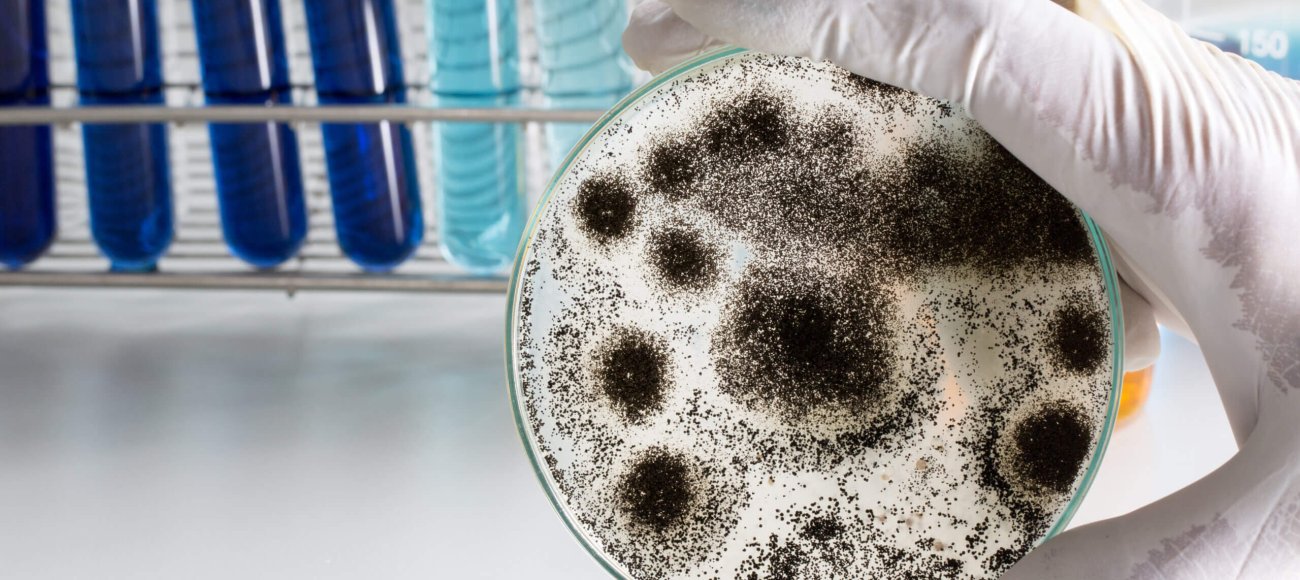
Mold growth on textiles and plastics can lead to material degradation, unpleasant odors, staining, and reduced product lifespan. In humid and moisture prone environments, fungi can colonize fabric fibers and polymer surfaces, affecting product quality, hygiene, and consumer safety. This is particularly important for outdoor materials, healthcare products, sportswear, packaging, consumer electronics and construction materials. Hence, manufacturers increasingly rely on fungal resistance standards such as AATCC 30 and ASTM G21 to validate material durability under microbial exposure conditions.
Risks associated with mold growth
- Material degradation – Fungal organisms can metabolize certain material components, leading to weakening of fibres, coatings or polymer structures. Prolonged exposure can shorten product lifespan.
- Odor generation – Mold growth frequently produces unpleasant musty odors caused by microbial metabolic activity. This can significantly impact consumer perception and usability.
- Discoloration – Visible fungal colonies can create staining, spotting, and uneven discoloration on both textiles and polymers, reducing product market value.
- Product failure – In severe cases, fungal growth may compromise coating adhesion, material flexibility, or structural stability, resulting in premature product failure.
- Consumer safety concerns – Some fungal species may trigger allergies, respiratory irritation, or skin sensitives. This makes fungal resistance validation especially important for consumer-facing and medical products.
Importance of fungal resistance validation before commercialization
Standards such as AATCC 30 vs ASTM G21 provide structured methodologies for evaluating fungal susceptibility under controlled laboratory conditions. These methods help manufacturers:
- Improve product durability
- Reduce warranty claims
- Ensure regulatory compliance
- Enhance consumer confidence
- Validate antimicrobial treatment effectiveness
What is AATCC 30?
AATCC 30, developed by American Association for textile chemists and colorists, is a test method used to evaluate antifungal and mildew resistance in textile materials under controlled laboratory conditions.
Test methods:
AATCC 30 has four different types tests, each designed for specific exposure and types of textile tested
- AATCC 30 test i – Soil burial test method
- AATCC 30 II – Agar plate, Chaetomium globosum
- AATCC 30 III – Agar plate, Aspergillus niger
- AATCC 30 IV – Humidity jar, mixed spore suspension
At MIS, we perform mold resistance testing – AATCC 30 III.
AATCC 30 III methodology overview
- Textile samples are prepared for test under controlled laboratory conditions.
- Samples are then exposed to a high concentration of Aspergillus niger spores.
- Inoculated samples are incubated under humid conditions for a predefined contact time that are favorable for fungal growth.
- The method evaluates visible fungal growth on textile surfaces rather than fiber strength loss.
- Surface effects such as discoloration, staining, spotting, and fungal colony formation are observed.
- Results are assessed using both macroscopic and microscopic examination techniques.
- Final interpretation determines the textile’s resistance to aesthetically damaging fungal growth.
Commonly used for:
- Cotton, silk, wool, Linen
- Nylon, rayon, Polyester, Viscose
- Sandbags, tarpaulins, tents and more.
What is ASTM G21?
ASTM G21, developed by ASTM International, is a standard test method used to evaluate the resistance of plastics and synthetic polymers to fungal growth.
Test procedure:
- Test samples and controls are placed on nutrient-salt agar
- They are inoculated with spore suspension
- Samples are incubated at specified temperature for up to 28 days
- Specimens are rated on a 0-4 scale based on fungal coverage
Commonly used for:
- Molded and fabricated articles
- Tubes, rods, pipes
- Coatings, sheets and film materials
- Marine plastics
Also read :
- ASTM Standards for Plastics: ASTM G21 vs ASTM D3273
- ISO 846 vs ASTM G21: Key Differences in Microbial Testing of Plastics
AATCC 30 vs ASTM G21 : core differences
| Parameter | AATCC 30 | ASTM G21 |
| Purpose | To assess antifungal activity of textiles to mildew and rot | To assess antifungal resistance of plastics and polymeric materials |
| Test microorganisms | Aspergillus niger | Aspergillus bransiliensis, Penicillium funiculosum, Chaetomium globosum, Trichoderma virens, Aureobasidium pullulans |
| Scope of products | Textiles like cotton, silk, sandbags, wool, tarpaulin, rayon, Spandex etc | Synthetic polymer materials (films, sheets, molded parts) |
| Origin | The American Association of Textile Chemists and Colorists | ASTM International |
| Results Interpretation | Visual and microscopic observation of growth | Visual fungal growth rating (0-4 scale) |
Fungal resistance vs antifungal activity
Fungal resistance and antifungal activity are related but distinct concepts:
- Fungal resistance refers to a material’s ability to resist fungal colonization or growth
- Antifungal activity refers to the active suppression or killing of fungal organisms by treated materials
How are results interpreted in AATCC 30 and ASTM G21 ?
AATCC 30 result interpretation
- Interpretation is done based on the extent of visible fungal growth on the textile surface.
- Macroscopic and microscopic observations are made to assess the growth.
- Minimal or no fungal growth indicates high fungal resistance performance.
ASTM G21 result interpretation
- Result interpretation is done using a visual fungal growth rating scale from 0 to 4.
- Rating 0 indicates no visible fungal growth observed.
- Higher ratings indicate increased fungal growth on the material surface.
- Materials with lower ratings are considered more resistant to fungal growth under humid conditions
Common fungal strains used – AATCC 30 vs ASTM G21
AATCC 30 Test III – Aspergillus niger (ATCC – 16888), Chaetomium globosum, Penicillium varians, Trichoderma viride
ASTM G21 – Aspergillus bransiliensis, Penicillium funiculosum, Chaetomium globosum, Trichoderma virens, Aureobasidium pullulans
When should you use AATCC 30?
Use AATCC 30 if your product is:
- Cotton, Silk, wool or linen
- Rayon, Nylon, Polyester or spandex
- Sandbags, Tarpaulins, Tents
When should you use ASTM G21?
Use ASTM G21 if your product is:
- Molded and fabricated articles
- Tubes, rods, pipes
- Coatings, sheets and film materials
- Marine plastics
How to choose the right fungal resistance test
The choice between AATCC 30 and ASTM G21 should always depend on material composition, intended use conditions and industry compliance expectations.
| Material type | Recommended test |
| Cotton fabric | AATCC 30 |
| Plastic or polymer tubes, rods, pipes | ASTM G21 |
| Polymer coatings, sheets and films | ASTM G21 |
| Tarpaulins | AATCC 30 |
Conclusion
AATCC 30 vs ASTM G21 represents a comparison between two important fungal resistance standards designed for different material categories and industrial applications. Before selecting the right standard, manufacturers should evaluate their material type, environmental exposure risks, product application and regulatory requirements to ensure a smooth approval and proper market launch.
Need help to select between AATCC 30 vs ASTM G21?
Choosing the right fungal resistance standard can directly impact product validation, durability claims and commercial success. At MIS, our expert microbiology team provides mold resistance testing solutions, performing rigorous testing according to standard protocols that generating reliable and reproducible results. Need help in choosing the right standard for your product?
To get a quote on AATCC 30 and ASTM G21, contact our experts here.
FAQs
What is the main difference between AATCC 30 and ASTM G21?
The primary difference is the material category, AATCC 30 tests for textiles while ASTM G21 tests for plastics and polymeric materials
Can AATCC 30 be used for plastic materials?
No. AATCC 30 is specifically designed for textile materials and is generally not the best suitable test for plastic-only materials. ASTM G21 is a better alternative for testing plastics
What does a rating of 0 in ASTM G21 mean?
A rating of 0 indicates that there is no visual growth of fungi observed on the test sample and hence it is highly resistant to fungal growth.
Why are fungal resistance tests important?
Fungal resistance tests help evaluate whether materials can resist mold growth, preventing degradation, odor formation, discoloration and product failure in humid environments.
Is ASTM G21 quantitative or qualitative?
ASTM G21 is primarily a qualitative test because results are based on visual fungal growth ratings rather than numerical microbial reduction values.
Can materials pass ASTM G21 and still develop mold later?
Yes, materials may still develop mold under prolonged or harsher real-world exposure conditions if environmental factors exceed laboratory test conditions.
Which fungi are used in ASTM G21?
ASTM G21 uses Aspergillus bransiliensis, Penicillium funiculosum, Chaetomium globosum, Trichoderma virens, Aureobasidium pullulans.
Does ASTM G21 evaluate antifungal additives?
Yes, ASTM G21 is used to assess the effectiveness of antifungal additives.
Is fungal resistance the same as antibacterial performance?
No, fungal resistance targets mold and fungal microorganisms, whereas antibacterial performance evaluates activity against bacteria, which are biologically different from fungi.