Key insights
- ASTM G21 is laboratory based test method that evaluates the resistance of synthetic polymer materials.
- In this test, results are interpreted visually using an mold/fungal growth rating scale that ranges from 0 to 4
- The test uses a mixed inoculum of 5 strains including Aspergillus brasiliensis, Aureobasidium pullulans, Chaetomium globosum, Trichoderna virens, Penicillium funiculosum to challenge the product performance
- In ASTM G 21, lower ratings are an indicator of stronger fungal resistance
- This test is widely used for plastics, coatings, foams, films, pipes, marine materials and other polymer-based products
Summary
ASTM G21 is one of widely accepted test standards to assess the fungal growth on synthetic polymeric materials. The test involves challenging product samples to a mixed fungal inoculum under high humidity and controlled temperature conditions for up to 28 days. Results are interpreted visually using a growth rating scale that helps manufacturers compare material performance, validate durability claims, and support product development related to fungal resistance.
What is ASTM G21?
Overview
ASTM G21 is used to assess whether a polymeric material can support fungal growth when exposed to favourable environmental conditions. The method is exposed to favorable environmental conditions. The method is primarily used for plastics and other polymeric materials.
Fungi used in ASTM G21 testing
- Aspergillus brasiliensis
- Aureobasidium pullulans
- Chaetomium globosum
- Trichoderma virens
- Penicillium funiculosum
How does ASTM G21 work?
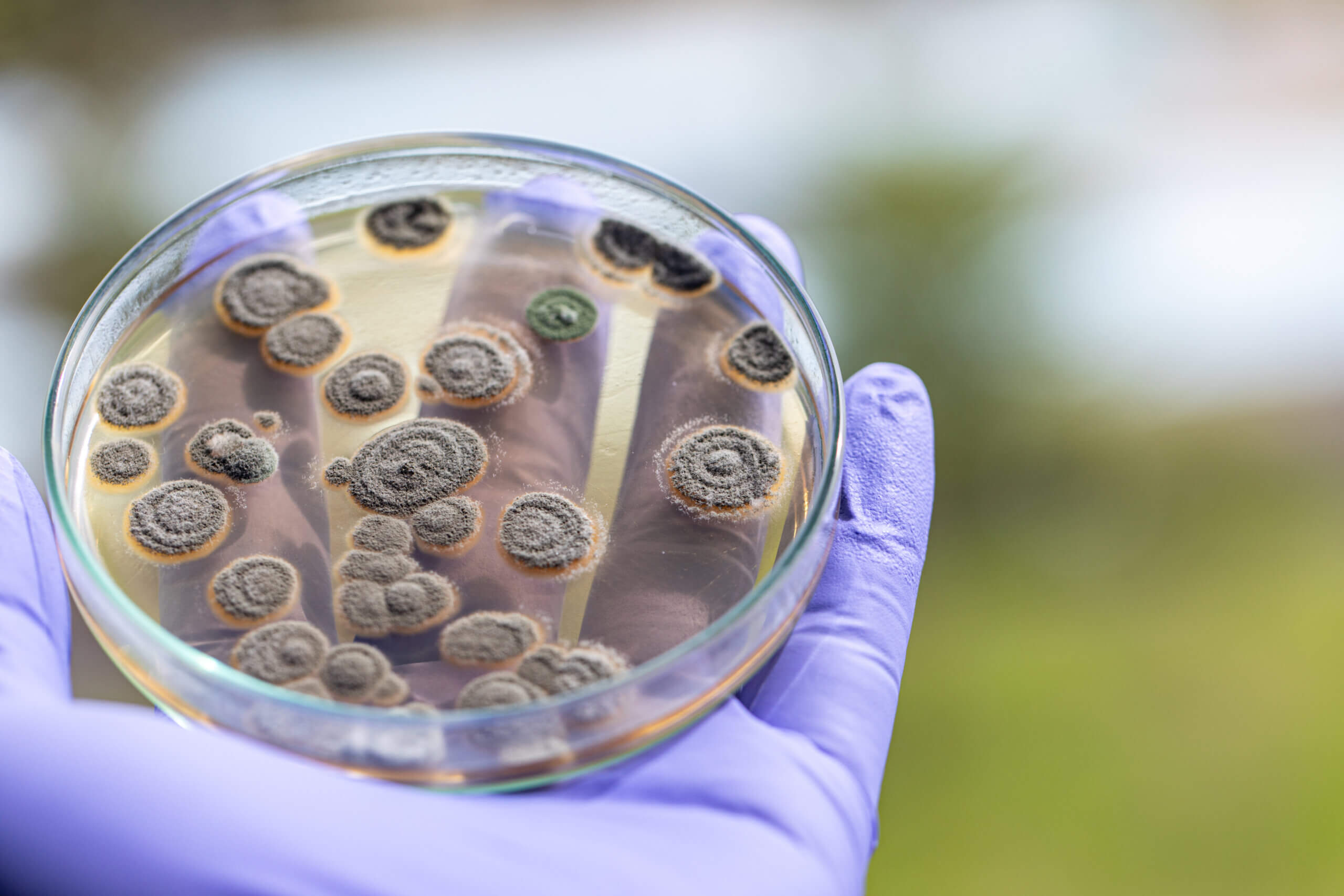
- The test specimens and untreated controls are placed on the solidified surface of nutrient-salts agar and inoculated with a mixed spore suspension
- The inoculated samples are then incubated at specified temperature and humidity conditions for a specific incubation period
- After incubation, the samples are observed for growth and rated for fungal resistance performance using a rating growth scale from 0-4.
How are ASTM G21 ratings determined
ASTM G21 ratings are assigned by visually assessing fungal growth on a test specimen after exposing it to a mixed fungal spore suspension under controlled environmental conditions.
In this test, the material is inoculated with specific fungal species and incubated in a warm, humid environment to promote fungal growth. The fungi are allowed to colonize the material surface if the material can support their growth over the incubation period, typically 28 days.
After incubation, specimens are inspected to check the extent of visible mold coverage. Based on the level of fungal growth observed, a rating from 0 to 4 is assigned.
Also read – ASTM Standards for Plastics: ASTM G21 vs ASTM D3273
Understanding ASTM G21 mold growth ratings
ASTM G21 mold growth rating table
| ASTM G21 rating | Description |
| 0 | No growth on the specimen |
| 1 | Traces of growth (less than 10% coverage) |
| 2 | Light growth (10-30%) |
| 3 | Medium growth (30-60%) |
| 4 | Specimens are covered with growth (60%) |
Why does mold growth matter
Fungal growth impacts appearance, durability and functional performance of materials. Mold formation often leads to staining, unpleasant odors, surface degradation further leading to decreased service life.
An ASTM G21 rating provides a standard way to manufacturers and product developers to evaluate and compare material performance during mold resistance testing. Results from this test are especially useful for products used in humid, enclosed or outdoor environments.
Also read
- ISO 846 vs ASTM G21: Key Differences in Microbial Testing of Plastics
- ASTM D3273 vs ISO 22196: Testing the Resistance of Interior coatings and Plastics to Mold and Bacteria
What rating is considered acceptable under ASTM G21?
ASTM G21 by itself does not describe global pass/fail criteria. The acceptable rating depends on several factors such as product requirements, regulatory expectations, customer specifications and intended end-use conditions. In many industries, a 0 or 1 rating is considered a benchmark for fungal resistance efficacy as it demonstrates no visible fungal growth during the test period.
How do manufacturers use ASTM G21 results?
ASTM G21 rating data is useful to manufacturers in:
- Comparing material formulations
- Assessing performance of additives and antimicrobial technologies
- Substantiating fungal resistance claims
- Validating durability of product in moist/humid environments
- Assessing coatings, foams, plastics and polymer composites
- Supporting quality control and product development
ASTM G21 vs related standards
| Parameter | ASTM G21 | ISO 846 | AATCC 30 |
| Purpose | To assess antifungal resistance of plastics and polymeric materials | To assess microbial (fungal and bacterial) deterioration of plastics | To determine the antifungal activity of textiles using a plate count method |
| Test microorganisms | Aspergillus brasiliensis, Penicillium funiculosum, Chaetomium globosum, Trichoderma virens, Aureobasidium pullulans | Aspergillus brasiliensis, Penicillium funiculosum, Chaetomium globosum, Trichoderma virens, Paecilomyces variotii | Aspergillus niger or Aspergillus brasiliensis |
| Scope of products | Synthetic polymeric materials (films, sheets, molded parts) | Plastics with even, cleanable surfaces (includes solid plastics, excludes porous foams) | Textiles including fibres, yarns, fabrics, apparel, home textiles, and industrial goods |
| Result interpretation | Qualitative: Visual fungal growth rating (0-4 scale) | Qualitative: Visual assessment of deterioration vs controls | Quantifies fungal growth by colony count (CFU) |
Also read – Why ISO 846 Matters: Testing Plastic Resistance to Fungi and Bacteria
Factors that influence mold growth ratings
Several variables can affect the mold growth ratings, including:
- Material composition
- Presence of plasticizers and additives
- Surface characteristics
- Manufacturing process
- Environmental conditioning before testing
- Antimicrobial treatments
Common misconceptions about ASTM G21 ratings
- ASTM G21 measures antimicrobial kill performance – False. This method evaluates fungal growth on a material surface, it does not quantify microbial kill rates
- ASTM G21 is a strict pass/fail test – False. The test assigns a mold growth rating from 0 to 4 based on the extent of visible fungal growth observed on the material.
- A 0 rating guarantees lifetime mold resistance – False. The test results apply only to the evaluated conditions. Long-term performance may vary due to environmental exposure, contamination, aging and material changes.
Limitations of ASTM G21 testing
- If the spore mixture isn’t prepared properly or contains leftover nutrients, it can cause abnormal fungal growth and misleading results
- Since the results are based on visual scoring, it varies between observers
- The 28-day incubation period can be long for manufacturers seeking rapid screening or quick go-to-market decisions
Need help with ASTM G21 testing?
ASTM G21 is one of the most widely used standards to assess fungal resistance in polymeric materials. MIS can help you validate performance of your product whether they are plastics, coatings, foams, films or specialty materials, in accordance with ASTM G21. Our expert microbiology team performs rigorous ASTM G21 testing, generating reliable and reproducible results. We also perform ISO 846 for microbial testing of plastics.
Contact our experts today to discuss your testing needs
FAQs
1. What is a good ASTM G21 mold growth rating?
A 0 rating is usually an indicator of strong fungal resistance.
2. Does ASTM G21 define pass/fail criteria?
No, the method uses an ASTM G21 rating that helps compare fungal resistance among materials rather than defining universal pass/fail criteria.
3. Which fungi are used in ASTM G21 testing?
The test uses Aspergillus brasiliensis, Aureobasidium pullulans, Chaetomium globosum, Trichoderma virens and Penicillium funiculosum
4. What is the difference between ASTM G21 and ASTM D3273?
ASTM G21 assesses fungal growth directly on polymeric materials using a standard fungal inoculum. Whereas, ASTM D3272 is used to assess mold growth resistance of interior coating systems under environmental chamber conditions.
5. How long does ASTM G21 testing take?
The standard incubation period is typically 28 days, although testing may be stopped earlier if substantial fungal growth is observed.
6. Does ASTM G21 measure antimicrobial efficacy?
No. The test evaluates fungal growth resistance and does not measure microbial kill performance
7. Is ASTM G21 suitable for plastics?
Yes, the standard was specifically developed for synthetic polymeric materials, including many types of plastics
8. Can coatings be tested using ASTM G21?
Yes, coatings are among the materials commonly evaluated using ASTM G21
10. Can ASTM G21 results change after weathering or aging?
Yes, weathering, heat exposure, leaching and other conditioning processes may alter fungal resistance and affect test results.