Key insights
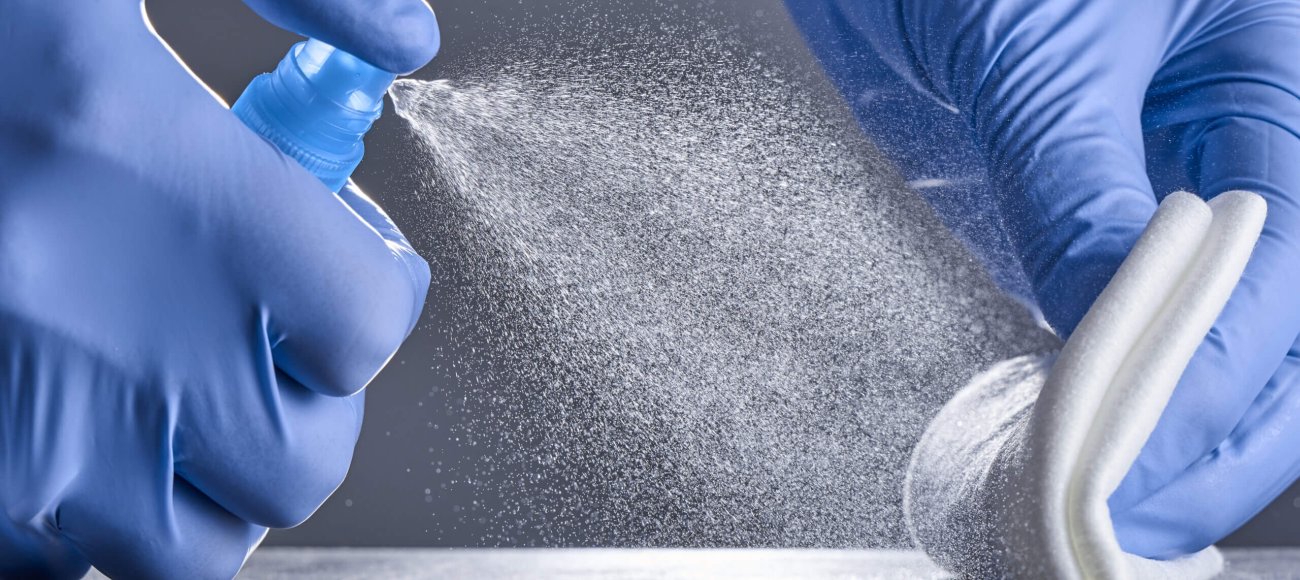
- The AOAC 961.02 test or Germicidal spray products test, assesses germicidal efficacy of spray disinfectants used on hard, non-porous surfaces
- This test is applicable for products such as trigger sprays, pump sprays, aerosol disinfectants.
- To pass the 60 carrier test, at least 59 out of 60 carriers must show no test organisms growth
- In 10-carrier test, the product should demonstrate complete disinfection.
- AOAC 961.02 is a recognized method by EPA that supports disinfectant efficacy and registration claims
Summary
The AOAC 961.02 is a phase 2 step 2 carrier-based test method used to evaluate the germicidal effect of spray disinfectants applied on hard, non-porous surfaces. It is widely recognized and accepted by regulators, including the EPA, for product validation. This method ensures disinfectants demonstrate reliable performance under realistic contamination conditions, supporting efficacy claims.
What is AOAC 961.02?
AOAC 961.02, otherwise known as the Germicidal Spray Products Test, is a carrier-based method developed by the AOAC International used to evaluate the bactericidal efficacy of spray disinfectants on contaminated hard, non-porous surfaces. The test determines whether a disinfectant is capable of eliminating deposited microorganisms dried on surface carriers. This test replicate practical use conditions to ensure product efficacy in actual use case scenarios.
AOAC 961.02 is one of the EPA-recognized test methods used to generate data on germicidal performance required for product registration in the United States.
Why was AOAC 961.02 test developed?
AOAC 961.02 was developed to provide a standardized method to evaluate the effectiveness of germicidal spray disinfectants on hard, non-porous surfaces. Disinfectant sprays are increasingly used in healthcare, institutional, and household settings, hence regulators and manufacturers need a reliable way to verify that these products are capable of eliminating harmful bacteria under conditions closely replicating actual-use.
Why does AOAC 961.02 testing matter?
AOAC 961.02 generates the efficacy data which demonstrates that a spray disinfectant can effectively kill bacteria on environmental surfaces. The method is recognized by the U.S. EPA and is commonly used to support disinfectant registration, regulatory submissions, and label claims.
AOAC 961.02 validates product performance under standard conditions, which helps manufacturers match regulatory requirements and enhance consumer confidence.
Products applicable for AOAC 961.02
AOAC 961.02 test applies for a wide range of spray disinfectants, including:
- Trigger spray disinfectants
- Pump sprays
- Aerosol disinfectants
- Ready-to-use surface disinfectants
Microorganisms required in AOAC 961.02
The mandatory test organisms used in AOAC 961.02 test include:
- Staphylococcus aureus
- Pseudomonas aeruginosa
- Salmonella enterica
AOAC 961.02 test procedure explained
- Test carriers (Microscope slides) are contaminated with microbial inoculum and allowed to dry out
- Few of the inoculated test carriers are enumerated to know the initial concentration
- Disinfectant samples are sprayed over the remaining contaminated dried carriers
- The carriers are incubated for a specified contact time
- At the end of contact time, the carriers are neutralized using suitable neutralizing solution
- Neutralized solution is plated and incubated to determine viable microorganisms
AOAC 961.92 passing criteria
To pass AOAC 961.02 test, a disinfectant must demonstrate-
- For 60 carrier test – No growth of test organisms in at least 59 out of 60 carriers
- For 10 carrier test – Complete disinfection in 10-carrier test
Common reasons for failure
Products can fail AOAC 961.02 testing due to several reasons:
- Inadequate contact time
- Poor formulation stability
- Insufficient active ingredient concentration
- Incomplete surface coverage during spray application
- Neutralization issues affecting microbial recovery
AOAC 961.02 vs other standards
| Parameter | AOAC 961.02 | AOAC Use dilution test ( (AOAC 955.14, 955.15, 955.17, 964.02) | EN 1276 |
| Purpose | To evaluate the germicidal disinfectant efficacy of ready-to-use spray products on hard, non-porous surfaces | To evaluate the antimicrobial efficacy of disinfectants intended for use on inanimate, hard, non-porous surfaces | To evaluate the bactericidal efficacy of chemical disinfectants and antiseptics used in food, industrial, domestic and institutional areas |
| Test strains | Staphylococcus aureus, Pseudomonas aeruginosa, Salmonella enterica | Salmonella enterica, Staphylococcus aureus, Trichophyton mentagrophytes, Pseudomonas aeruginosa | Pseudomonas aeruginosa, Escherichia coli, Staphylococcus aureus, Enterococcus hirae |
| Test type | Carrier-based test | Carrier based test | Suspension test |
| Passing criteria | Qualitative pass/fail assessment based on presence or absence of microbial growth on treated carriers | Qualitative pass/fail based on number of carriers showing no growth | Quantitative log reduction – ≥ 5 log reduction |
Also read –
Advantages of AOAC 961.02
AOAC 961.02 test:
- Replicates real-world contamination conditions on hard, non-porous surfaces
- Recognized and accepted by regulators such as EPA
- Well-suited for evaluating spray-disinfectant performance
- Generates reliable efficacy data that validates performance
Limitations of AOAC 961.02
- AOAC 961.02 test
- Scope of applicability Is limited to spray formulations
- Can produce variable results because the method does not standardize important factors like drying, humidity and bacterial concentration on carrier surfaces
When should manufacturers choose AOAC 961.02?
Manufacturers can choose AOAC 961.02 testing when:
- Developing spray-based disinfectant products
- Seeking EPA registration in the United States
- Validating surface efficacy claims
- Demonstrating real-world surface disinfection performance
Choosing the right testing partner
Selecting a qualified test laboratory is important while looking for testing.
At MIS, we offer comprehensive disinfectant efficacy testing services adhering to the highest industry standards. Our testing laboratory and protocols are designed to validate the bactericidal activity of spray disinfectant products in accordance with AOAC 961.02, helping manufacturers achieve compliance and build consumer trust.
Contact our experts today to discuss your testing needs.
FAQs
1. What is AOAC 961.02 ?
AOAC 961.02 is a carrier test used to evaluate the germicidal efficacy of spray disinfectants on hard, non-porous surfaces.
2. Does EPA accept AOAC 961.02 test?
Yes, AOAC 961.02 is one of the EPA-recognized methods to support disinfectant efficacy claims
3. What is the difference between a 60- carrier and a 10-carrier test?
The 60-carrier test is used for primary efficacy evaluation using 60 carriers while the 10-carrier test supports additional organism claims using 10 carriers
4. Is AOAC 9961.02 applicable for one-step clean-disinfectants?
Yes.
5. How is AOAC 961.03 different from suspension testing?
AOAC 961.02 is a carrier-based surface test where bacteria are dried onto carriers before treating with disinfectants. Whereas, suspension tests use microorganisms directly exposed to the disinfectant in a liquid medium.
6. Why are microorganisms dried onto carriers?
The drying is done to replicate real-world contamination conditions where microbes attach to surfaces unlike remaining in liquid
7. Is AOAC 961.02 applicable for ready-to-use disinfectants?
Yes, it is applicable for ready-to-use spray disinfectants
8. What is the role of neutralization in AOAC 961.02?
Neutralization stops disinfectant activity for specific exposure period helping in accurate efficacy evaluation.
9. Can AOAC 961.02 evaluate residual antimicrobial performance?
No, it evaluates immediate disinfectant efficacy, not residual antimicrobial performance.