Quick insights
- Mold resistance testing for sustainable textile is done to ensure fabric durability and resistance to mold growth
- One of the major challenges with sustainable textiles is their susceptibility to mold growth due to natural fiber composition.
- Standardized test methods like AATCC 30 (111) and ISO 13629-2 simulate natural humid and moisture prone conditions to check product resistance
- Early testing minimizes product failures, returns, and brand image damage
Summary
Sustainable textiles have surged in popularity due to increased customer awareness about massive carbon footprint and harm to the environment. However, sustainable textiles being made up of natural fibres are more prone to moisture retention and hence mold growth. Mold resistance testing evaluates how fabrics perform when deliberately challenged with fungal growth under conditions which favor mold growth. This helps manufacturers improve durability, meet regulatory expectations, and build customers’ trust in eco-friendly textile products.
Why sustainable textiles need mold resistance testing
1. Vulnerability of natural textiles composition to fungal and mold growth –
While these sustainable textiles materials are fully biodegradable and reduce environmental impact, however, fungi love to feed on organic materials. Hereby, some natural fibers are more vulnerable to fungal growth when exposed to moisture and humidity.
Mold can develop when textiles experience:
- High humidity
- Poor ventilation
- Wet storage conditions
- Long shipping durations
- Improper packaging
Once fungal growth is established, it can damage fabric quality and aesthetic appeal in many ways –
- Fabric discoloration
- Unpleasant odors
- Fiber degradation
- Loss of strength
- Product rejection by customers
2. Mold contamination during shipping
One of the biggest challenges with sustainable fabrics is preventing mold growth during long distance shipping and storage. As sustainable textiles are sourced and shipped globally, they often spend weeks in containers, warehouses, and distribution centers.
During transit, high humidity and poor ventilation can create ideal conditions for mold growth, particularly on moisture-absorbing natural fibers such as organic cotton, hemp, and bamboo.
Mold resistance testing helps manufacturers verify that fabrics can withstand these real-world storage and shipping conditions before reaching customers.
What Is Mold Resistance Testing?
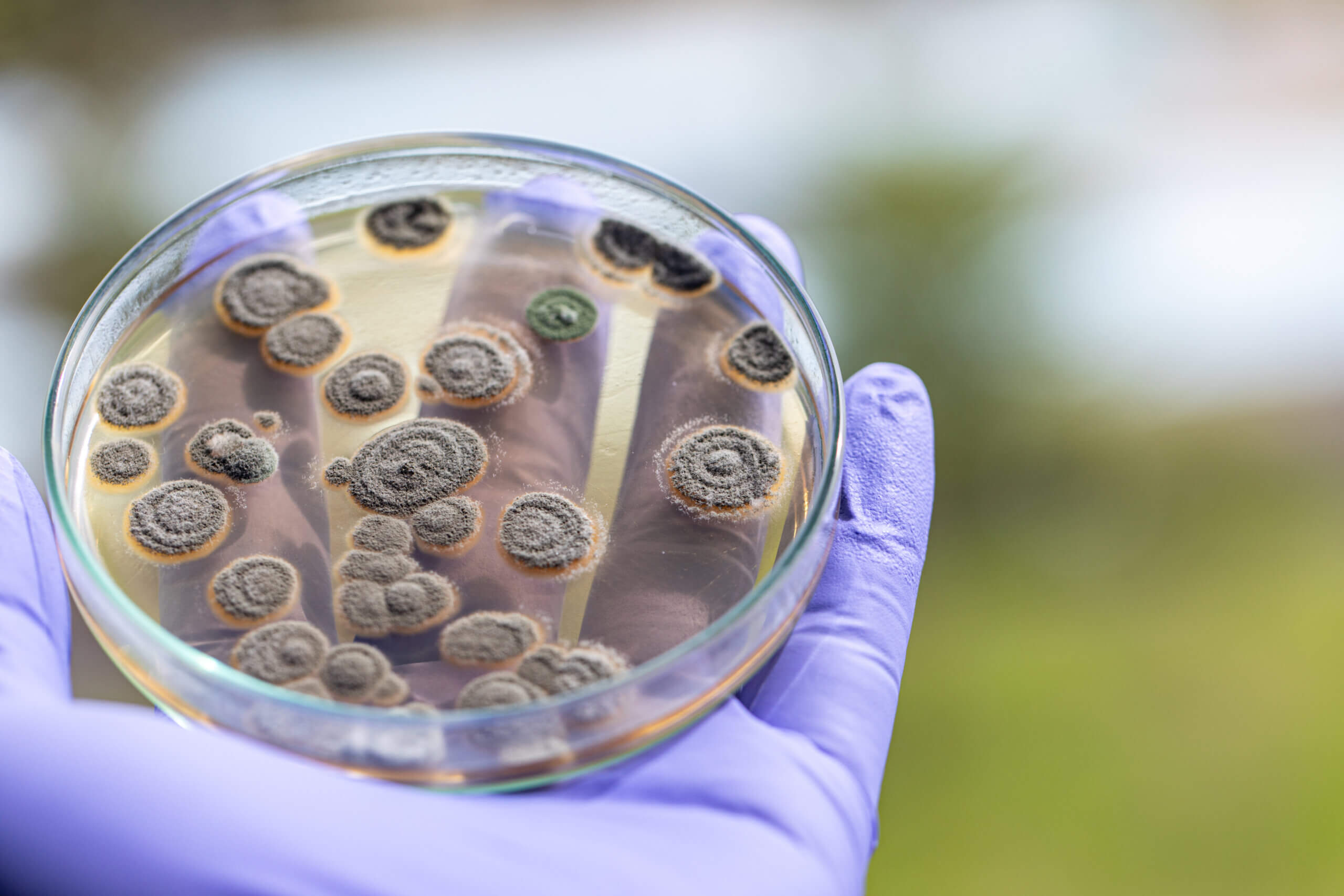
Mold resistance testing evaluates the ability of textiles to resist fungal growth in a highly humid environment.
The fabric is exposed to selected mold strains under conditions that are favorable for fungal growth for at least 4 week period or application based claims. After incubation, qualitative assessment is done to understand the extent of visible mold growth and damage made to fabric structure and appearance.
Common standards for mold resistance testing of textiles
AATCC 30 (111) – Resistance of Textile Fabrics to Mold Growth
AATCC 30 is one of the most widely used standards for evaluating fungal growth on textile materials. It determines whether textiles can resist mold development or support fungal growth under controlled laboratory conditions. This test is mostly applicable to textiles used in outdoor settings.
Why it matters:
Manufacturers use AATCC 30 to evaluate the effectiveness of antimicrobial treatments and to ensure textile durability in humid environments.
For detailed test procedure, check our service page – https://microbe-investigations.com/textile-services/fungicidal-yeasticidal-testing/aatcc-30-antifungal-textile-testing/
ISO 13629-2 – Antifungal Activity Assessment of Textile Materials
ISO 13629-2 is used to assess the antifungal efficacy of textile impregnated with fungicidal/ antifungal agents
Scope of testing
- Home furnishings
- Apparel
- Supports wear
- And similar fabrics
For detailed test procedure, check our service page – https://microbe-investigations.com/textile-services/fungicidal-yeasticidal-testing/iso-13629-2-antifungal-textile-testing/
Which textile products require mold resistance testing?
Mold resistance testing is valuable for:
- Sustainable apparel
- Outdoor clothing
- Sportswear
- Workwear
- Upholstery fabrics
- Curtains
- Mattresses
- Carpet materials
- Footwear textiles
- Bags and backpacks
- Military textiles
- Automotive interiors
How mold resistance testing Is performed
- Sample preparation
Textile specimens are cut as per standard guidelines
- Fungal inoculation
Selected mold species are introduced onto or around the test material.
- Incubation
Samples are placed under carefully controlled temperature and humidity conditions that encourage mold growth. The incubation period typically ranges from 24-28 days.
- Evaluation
Post incubations, textile material are evaluated for
- Visible fungal growth
- Surface coverage
- Material deterioration
- Color changes
- Structural damage
Choosing the Right Mold Resistance Test
The most suitable testing method depends on:
- Textile material
- End-use application
- Regulatory requirements
- Customer specifications
- Presence of antimicrobial treatments
- Expected environmental exposure
Selecting the appropriate standard ensures meaningful and reliable results.
The growing challenge of mold in sustainable fashion
- Circular fashion is driving new material innovation – Over the past 3-4 years, circular fashion has gained a lot of attention and popularity due to its a closed-loop system where clothing is sourced, designed, produced, and reused to minimize waste. Sustainable fashion is shifting from virgin synthetics and fast fashion materials to plant-based biodegradable alternatives. However, these recycled textile materials are being continuously questioned for their long term durability. A recent study published in the journal of science direct (https://www.sciencedirect.com/science/article/abs/pii/S1385894726015706?via%3Dihub) has highlighted how silver nanoparticles derived from vegetable waste extracts can be integrated into cotton fabrics to create multifunctional textiles with enhanced performance. Before commercialization, these materials should be evaluated for their resistance to mold and biological degradation to ensure consistent performance.
- Sustainability must be able to deliver product performance – Sustainable textiles are a great initiative to reduce environmental impact. But, these eco-friendly textiles should not compromise on product quality. Many studies have highlighted that materials like cotton and suede are more susceptible to mold growth, whereas polyester, imitation suede, and leather demonstrate greater resistance under similar conditions. This clearly highlights the importance of evaluating both the environmental impact and the long-term durability of sustainable textiles before they reach the market and end users.
Validate the mold resistance of your sustainable textiles
Whether you’re developing eco-friendly apparel, home furnishings, technical fabrics, or performance textiles, MIS offers comprehensive mold resistance testing using internationally recognized standards such as AATCC 30 (111) and ISO 13629-2.
At MIS, we help you verify your product durability and antifungal resistance and deliver test data you can rely on.
To build customer trust and avoid product failure, get your products tested today.
Check this – Textile vs Plastic Fungal Testing: AATCC 30 and ASTM G21 Explained
FAQs
1. What is mold resistance testing for textiles?
Mold resistance testing evaluates how well a textile resists fungal growth when exposed to controlled humidity and mold spores in a laboratory environment.
2. Why are sustainable textiles more prone to mold?
Many sustainable textiles use natural fibers that absorb more moisture, creating conditions that can encourage fungal growth if products are stored or transported improperly.
3. Which standard is commonly used for textile mold resistance testing?
AATCC 30 (111) is one of commonly used test methods to check the mold resistance of textile materials.
4. Does mold resistance testing prove antimicrobial performance?
No. Mold resistance testing specifically evaluates resistance to fungal growth. Additional antimicrobial efficacy tests are required to support antibacterial or broader antimicrobial claims.
5. Can mold resistance testing help extend the lifespan of sustainable textiles?
Yes. Mold resistance testing helps ensure sustainable textiles remain durable, resistant to fungal growth throughout storage, shipping, and their intended lifespan.