Quick insights
- ASTM E2149 standard is used to measure the antimicrobial efficacy of immobilized antimicrobial agents under dynamic contact conditions
- Test results under ASTM E2149 are reported as percent reduction or log reduction values, indicating bacterial reduction after exposing test sample to target microbes
- For marketing claims, higher log reduction values represent stronger antibacterial performance.
- ASTM E2149 testing is applicable to hydrophobic textile materials, paper, powder, granular materials
- ASTM E2149 test result reports are used by manufacturers to support product performance claims and compliance documentation
Summary
ASTM E2149 is one of the most widely used methods for evaluating the antibacterial performance of hydrophobic treated materials under dynamic contact conditions. Under ASTM E2149 testing, test results are reported as log reduction values and high log reduction values indicate stronger antibacterial performance. To pass the ASTM E2149 test, the product needs to achieve a 2-log reduction (99% reduction) or higher values.
What Is ASTM E2149?
ASTM E2149 standard provides a quantitative test method to evaluate the antibacterial activity of immobilized, non leaching antimicrobial agents used on treated materials.
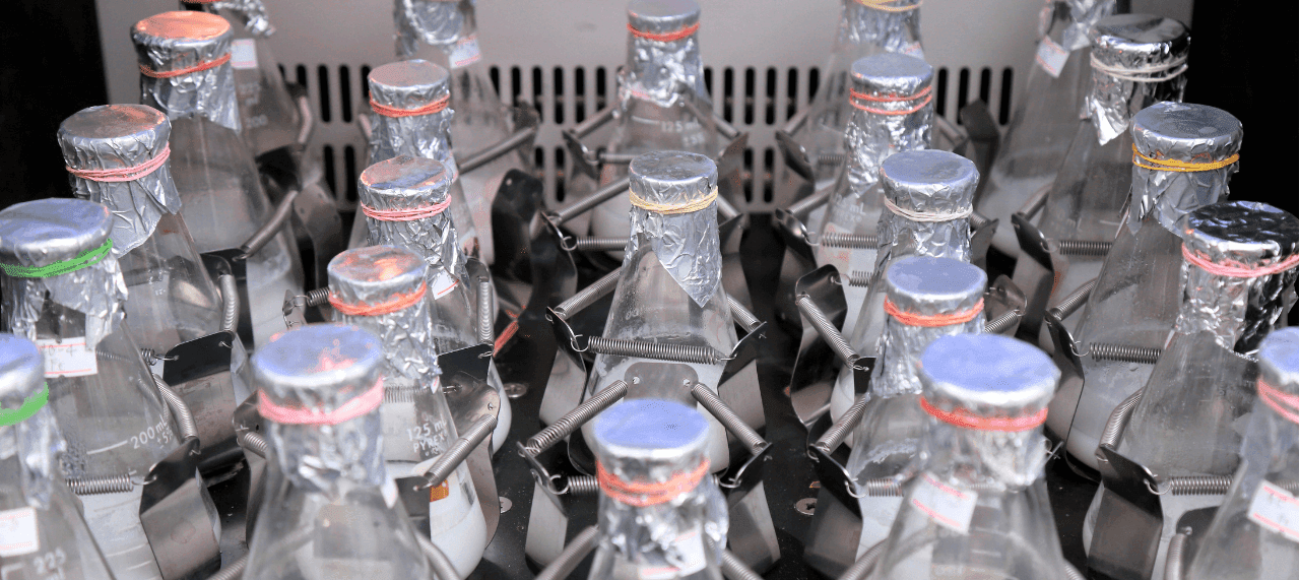
ASTM E2149 is also referred as “shaking flask method” which work on the concept of dynamic contact conditions to bring continuous contact between bacteria and surface bound substrate
Scope of products for testing
- hydrophobic textile materials,
- paper,
- powder,
- granular materials
Read more – ASTM E2149 vs AATCC 100: Choosing the Right Antibacterial Textile Test
How ASTM E2149 generates log reduction results
1. Inoculation
Standardized cultures of the bacterial suspension are dispensed into separate flasks containing the treated ( test sample) and untreated (control sample).
2. Dynamic contact conditions
The flasks are placed on a shaker and agitated continuously ensuring consistent contact between bacteria and the material surface throughout the test.
3. Microbial enumeration
After the specified contact time, the remaining viable bacteria from each flask are recovered and quantified using plate count method.
4. Calculate the log reduction
The bacterial count from the treated specimen is counted and compared with that of the untreated control to calculate the log reduction value.
Result Interpretation and passing criteria
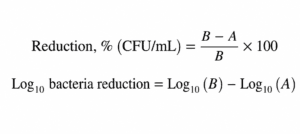
ASTM E2149 results as either percentage reduction or log₁₀ reduction.
If the bacterial counts in the untreated control and the inoculum-only control agree within 15% or if an untreated control is unavailable, the treated sample is compared directly with the inoculum-only control.
Where:
- A = CFU/mL recovered from the treated specimen after the contact time
- B = CFU/mL recovered from the inoculum-only control after the contact time
Why ASTM E2149 uses dynamic contact conditions
ASTM E2149 uses dynamic contact conditions in which the test flask containing inoculated treated samples is continuously shaken for specific contact duration. This constant agitation ensures proper contact between microorganisms and the substrate-bound antimicrobial agents.
Dynamic conditions make ASTM E2149 particularly suitable for evaluating non-leaching or immobilized antimicrobial technologies, where the antimicrobial agent is permanently bound to the material surface rather than released into the surrounding environment.
What Is considered a good ASTM E2149 Result?
ASTM E2149 does not establish any pass or fail criterion or specify a minimum log reduction required for compliance. However, antibacterial activity of a material is reported as log reduction or percentage reduction in viable bacteria.
As per industry standards,
- ≥ 2 log reduction is considered strong antimicrobial activity
- < 1 log reduction is considered low or limited antimicrobial activity
| Log reduction | Percentage reduction | Interpretation |
| < 1 Log | < 90% | Limited antibacterial activity |
| ≥ 2 Log | ≥ 99% | Generally considered effective antibacterial activity |
ASTM E2149 vs AATCC 100
| Parameters | ASTM E2149 | AATCC 100 |
| Testing type | Dynamic Shake-flask method | Static contact method |
| Application | Hydrophobic textiles with non-leaching antimicrobial agents | Hydrophilic textiles and other porous textile materials |
| Mandatory test organisms | Escherichia coli (ATCC 25922) | Staphylococcus aureus (ATCC 25923), Klebsiella pneumoniae (ATCC 4352) |
| Passing criteria | ≥ 2 log or higher | Treated samples should achieve higher log reduction compared to untreated controls |
Conclusion
At Microbe Investigations Switzerland (MIS), we provide ASTM E2149 in line with standard guidelines run by our experienced scientists. We aim to deliver comprehensive test reports with precise and reproducible data to support product development, regulatory submissions, and global market access.
For more information on ASTM E2149 Testing, contact our experts now.
Also read
- ISO 20743 vs AATCC 100: How antibacterial activity in textiles is tested
- ISO 20743 vs JIS L 1902: Antibacterial Testing Standards for Textiles
FAQs
1. Does ASTM E2149 measure antiviral activity?
Yes, ASTM E2149 can be customized to check antiviral efficacy of hydrophobic textiles.
2. Which bacteria are commonly tested?
The most commonly tested organisms include Staphylococcus aureus and Klebsiella pneumoniae.
3. Can ASTM E2149 results support antimicrobial claims?
Yes. ASTM E2149 results can support antibacterial claims by providing quantitative evidence of a product’s bactericidal performance.
4. Does a higher log reduction always indicate better performance?
Generally yes. Higher log reduction values indicate greater bactericidal performance under the controlled test conditions.
5. Is ASTM E2149 suitable for non-leaching antimicrobial technologies?
Yes, ASTM E2149 is specifically developed to evaluate the antibacterial activity of non-leaching (immobilized) antimicrobial technologies, where the antimicrobial agent is permanently bound to the material rather than released into the surrounding environment.