Quick Insights
- Mosquito repellent claims are statements made about a product’s functions to provide protection against mosquitos
- To verify the claims, products are tested using laboratory tests and field/ semi field trials
- Testing methods measures different parameter related to product performance such as mosquito biting, landing rates and CPT (Complete Protection Time)
- Verified efficacy claims provide scientific evidence that supports product performance statements for regulatory submissions
- Unverified or poorly substantiated claims can lead to regulatory challenges, product recalls, reputational damage, consumer complaints
Summary
A mosquito repellent claim is a statement about how well a product protects against mosquito bites. This claim is based on performance parameters like mosquito biting, landing rates and CPT ( Complete Protection Time). To make sure these claims are true, the product has to be tested in labs and in real-world conditions.
What Is a Mosquito Repellent Claim?
A mosquito repellent claim is any statement made on a product label or marketing material that describes how the product performs against mosquitoes. It helps the users to understand product benefits such as –
- how well the product prevents mosquito bites
- how long the protection lasts
- how effectively it reduces mosquito landings.
For example – a product may claim “up to 8 hours of protection” or “repels 90% of mosquitoes.”
Why Scientific Validation Is Necessary
Mosquito repellent products play an important role in providing protection against mosquito-borne diseases, which are among the most dangerous insect-related health threats globally. However, before any product reaches the market, it is important to scientifically evaluate its performance.
Scientific validation combines standardized test conditions, target insect strains and strict passing criteria to confirm that mosquito repellent claims are accurate, consistent, and based on real performance rather than assumptions.
This also helps support regulatory approval and builds trust among consumers by proving the product works as claimed.
What Is Mosquito Repellent Efficacy Testing?
Mosquito repellent efficacy testing is a stringent process used to determine how long a product prevents you against mosquito bites.
It is applicable to the products claiming repellent properties such such
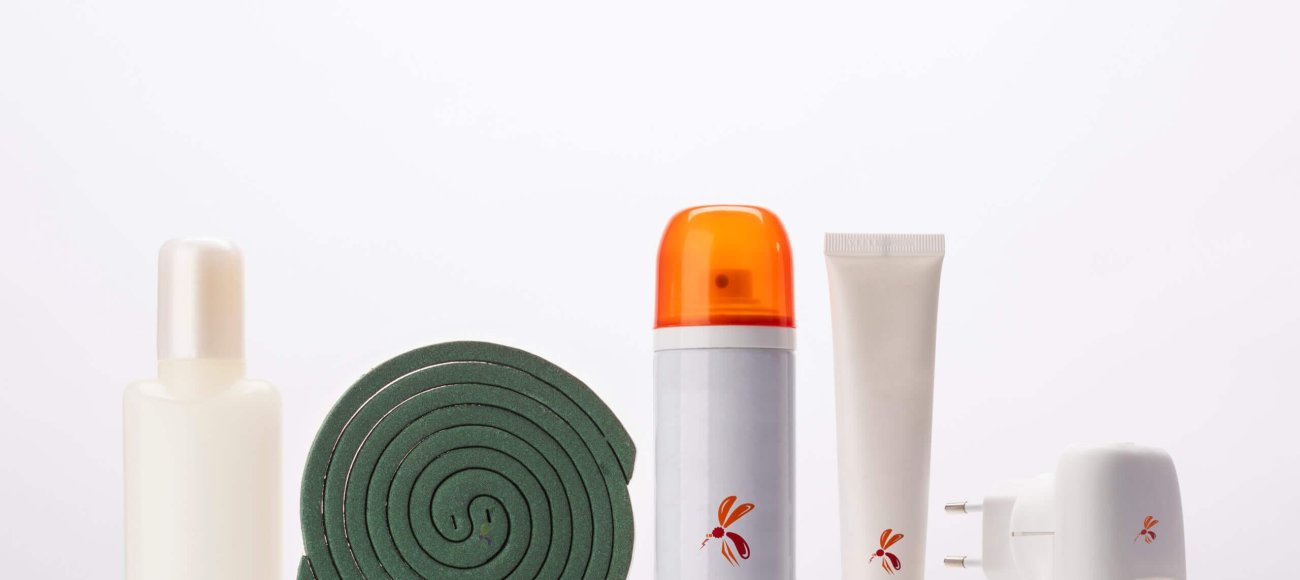
- Repellent sprays
- Creams and lotions
- Treated textiles
- Wearable repellents such as bracelet and patches
- Spatial repellents
Key parameters evaluated during repellent testing
Complete Protection Time ( CPT) – For repellent testing, Complete Protection Time (CPT) is one of the most critical factors. CPT refers to the duration between product application and the first confirmed mosquito bite.
Repellency percentage – Repellency percentage is calculated by comparing mosquito activity on treated and untreated sample materials. Higher repellency percentages is considered indicator of stronger protection against mosquitos
Landing rate reduction – This is evaluated to understand how effectively the product reduces mosquito landings on treated samples compared to controls.
Knockdown effect: Measured to know how quickly mosquitoes are incapacitated after exposure to the product.
Mortality rate: It is the percentage of mosquitoes that die after the knockdown phase followed by observation period
How mosquito repellent product testing is conducted ?
- Product application: The repellent product (such as spray, lotion, fabric) is applied on volunteers arms or legs as per its intended usage instructions
- Mosquito exposure: Treated volunteers are exposed to a defined number of mosquitoes under controlled conditions such as temperature, humidity, and mosquito species.
- Observation phase: Mosquito landings, probing, and rates are monitored.
- Efficacy comparison with control : Repellency reduction on treated samples is compared with untreated controls
Laboratory testing methods for mosquito repellent products
| Test Method | It evaluates | Scope of products for testing |
| Arm-in-Cage Test | Bite protection, repellency rate, complete protection time (CPT) | Topical repellents like creams, sprays, lotions |
| Room Test | Evaluates mosquito repellency / knockdown / mortality | Spatial repellents such as coils, vaporizers, mats, aerosols, |
| Olfactometer Test | Assesses mosquito attraction or repellency based on odor response | including topical and spatial repellents, attractant baits, and trapping lures. |
For more details read here
- Arm-in-Cage Test : How Product Efficacy Is Scientifically Proven
- WHO Cone Test vs Tunnel Test: A Practical Comparison for Insecticide Treated Product Testing
- Tunnel Test for Insecticide treated Materials
Field Trials and semi field trials
Field trials and semi field trials are conducted to check the product efficacy in areas where mosquito populations naturally occur.
Why Semi field and field trials matter
There are the chances, a product that performs well in a laboratory may not perform similarly when used in outdoor environments.
Environmental factors are significantly influence efficacy, including:
- Temperature
- Humidity
- Wind
- Rainfall
- Sweating
- User behavior
Recognizing the problem with variable environment conditions and product efficacy, Field and semi field studies are a step ahead to assess the efficacy of products which have passed laboratory testing validation.
Field and semi field testing studies
- Nest kill and colony elimination studies – These types of studies are important for products claiming long-term control of social or colony-forming pests. Trials are conducted to evaluate the ability of a product to eliminate entire colonies or nests.
- Trap Efficacy & Attraction Studies – These trails are done in outdoor or semi field environments to understand the efficacy of a product to lure and capture target insects.
- Repellency & Deterrence Studies – Such trials are conducted to understand landing or biting behavior of insects when challenged with test products.
For details visit this page – https://microbe-investigations.com/entomology-testing/field-and-semi-field-trials/
Laboratory vs Semi-Field vs Field Testing
| Parametere | Laboratory Testing | Semi-Field Testing | Field Testing |
| Test settings | Fully controlled lab environment | Controlled enclosure that simulates outdoor conditions | Natural outdoor environment |
| Conditions | Fixed temperature, humidity, mosquito species | Partially controlled, semi-natural conditions | Fully variable real-world conditions |
| Mosquito Exposure | Defined and consistent exposure | More natural behavior with partial control | Natural mosquito populations |
| Control Level | High control over all variables | Moderate control | No control over environmental factors |
| Use Stage | Early stage testing | Pre field validation | Final stage validation |
4 common reasons claims fail validation
- Insufficient efficacy – The product is not able to deliver the repellence performance for x hours as claimed on the label.
- Short protection duration – When Complete Protection Time ( CPT) is significantly lower than what is marketed.
- Inconsistent performance – Results vary widely across tests or mosquito species, showing unstable effectiveness.
- Poor formulation – Weak active ingredients degrade quickly which results in poor performance claims.
Regulatory importance of mosquito repellent testing
Mosquito repellent testing plays a critical role in supporting product claims and demonstrating efficacy to regulatory authorities. Before companies/manufacturers can market a product a , it is a prerequisite that the product claim should be supported by scientifically generated data using standardized testing methods such as arm in cage, room test etc.
In addition, efficacy testing for mosquito control products helps to reduce the risk of misleading claims, product recalls and the risk of product failure.
Mosquito repellent testing services offered by MIS
At MIS, we offer comprehensive testing services to validate the efficacy of mosquito control products. From robust laboratory testing to the semi-field and field efficacy testing, our entomology experts tailored test studies based on your unique product needs.
We generate reproducible data to substantiate product claims, meet regulatory expectations, and build trust in real-world performance.
If you are developing lotions, sprays, treated textiles, or spatial repellents, connect MIS to get your product tested for reliable claims.
Related blogs
- Tick vs Mosquito Repellent Testing: Key Differences
- Tunnel Test vs Arm-in-Cage Test
- Understanding the WHO Cone Test: Evaluating Insecticide-Treated Surfaces and Materials
- Arm-in-Cage vs Field Testing: Which Mosquito Repellent Test Is Better?
FAQs
1. How is mosquito repellent effectiveness measured?
Mosquito repellent efficacy is measured by parameters like Complete Protection Time (CPT) and repellency percentage.
2. Why is testing required before making mosquito repellent claims?
Testing is done to ensure that the product performs as claimed under standardized conditions and matches the passing criteria stipulated in standard guidelines.
3. Can the same repellent work equally well against all mosquito species?
Not. A mosquito repellent may not provide the same level of protection against all species.
4. What is Complete Protection Time (CPT)?
Complete Protection Time (CPT) refers to the duration between application of a mosquito repellent and the first confirmed mosquito bite.
5. What mosquito species are commonly used in repellent testing?
Commonly used species include Anopheles, Aedes, or Culex mosquitoes
6. Are field studies required for mosquito repellent claims?
Yes. Regulatory bodies often expect robust data on product performance. Field studies play a critical role in assessing the product performance under variable environment conditions.
7. Can natural mosquito repellents be scientifically tested?
Yes. Natural or plant-based repellents are also evaluated using the laboratory, semi-field, and field methods.
8. What factors affect mosquito repellent performance?
Repellent performance of a product can be influenced by various factors such as temperature, humidity, sweat, mosquito species, application method, formulation stability, and environmental exposure.
9. What is the difference between laboratory and field testing?
Laboratory testing is conducted under controlled conditions, while field testing evaluates performance in real-world outdoor environments with natural mosquito populations.
10. Can mosquito repellent testing support regulatory submissions?
Yes.