Home / Disinfectant Testing / antibacterial / AOAC 961.02
- Swiss testing laboratory
AOAC 961.02 Germicidal Spray Product Testing

Hassle-free testing experience
Need to get a product tested? No worries! To and fro logistics are on us; we collect your products, test them and, deliver them back to you.
Summary
AOAC 961.02 is an EPA-recognized carrier-based test used to evaluate the germicidal efficacy of disinfectants used on hard, non-porous surfaces. The test determines whether a product achieves complete disinfection under simulated real-use conditions, supporting EPA registration and disinfectant claims.
Related tests for you
Quick understanding of the test
AOAC 961.02 (2009) - Efficacy test for germicidal spray products as disinfectants
Application
Mandatory test strains
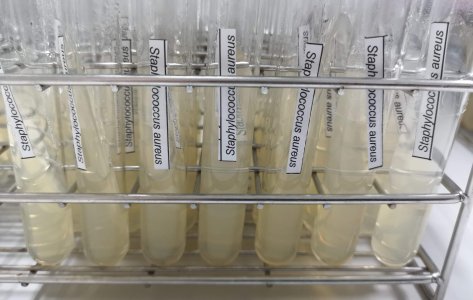
- Staphylococcus aureus
- Pseudomonas aeruginosa
- Salmonella enterica
- Test carriers are inoculated with microbial inoculum and dried.
- The disinfectant spray is applied to the dried carriers, incubated for a specific contact period.
- Carriers are transferred to neutralizing solutions.
- Viable microorganisms are quantified by plating the neutralizing extract, ensuring complete disinfection is achieved.
- Provides a reproducible and standardized procedure to measure the germicidal activity of spray disinfectants.
- Ensures compliance with regulatory bodies like EPA for product efficacy.
Turnaround Time
Passing criteria
- To pass AOAC 961.02 test (60-carrier test), at least 59 out of 60 carriers must show no growth of the test organism to pass.
- For a 10-carrier test, the product should demonstrate complete disinfection.
Do you have a product that needs testing?
What Is AOAC 961.02 Test?
AOAC 961.02, known as the Germicidal Spray Products Test. is a standardized method for evaluating the germicidal efficacy of spray disinfectants. This test is one of the EPA-recommended methods for registering antimicrobial sprays in the United States. As a carrier based test, AOAC 961.02 assesses the effectiveness of spray disinfectants on contaminated hard, non-porous surfaces, to simulate real-world use conditions.
Products Applicable for AOAC 961.02 Testing
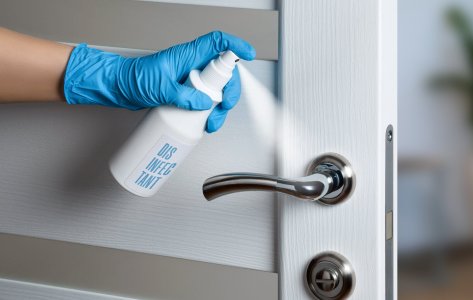
This method applies to spray disinfectant products such as
- Trigger sprays
- Pump sprays
- Aerosol disinfectants
- Ready-to-use surface disinfectant sprays
Products Applicable for AOAC 961.02 Testing
The mandatory test organisms specified in AOAC 961.02 are
- Staphylococcus aureus,
- Pseudomonas aeruginosa,
- and Salmonella enterica.
AOAC 961.02 Test Method

- Microscope slides of size 18 x 36 mm ( referred as test carriers) are placed in petri plates.
- Microbial inoculum is spread onto test carriers and is allowed to dry out.
- Few inoculated test carriers are enumerated to know initial microbial concentration.
- Product samples are sprayed over remaining dried inoculated slides. These slides are further incubated for specific contact period time.
- At the end of contact period, slides are transferred to individual containers containing neutralizing solutions.
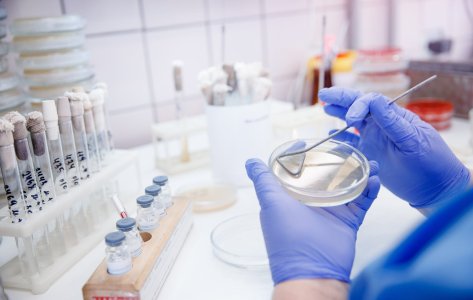
- Neutralizing extract is plated and incubated to determine viable microorganisms.
Passing Criteria for AOAC 961.02
- To pass AOAC 961.02 test (60-carrier test), at least 59 out of 60 carriers must show no growth of the test organism to pass.
- For a 10-carrier test, the product should demonstrate complete disinfection.
Why AOAC 961.02 Is Required for EPA Registration
AOAC 961.02 is an EPA-accepted, standardized test method used to demonstrate the bactericidal effectiveness of spray disinfectant products. The EPA requires the data generated using this method to ensure that any spray germicidal product marketed in the U.S. performs as claimed.
By following AOAC 961.02 test guidelines, manufacturers provide repeatable and validated results that mimic real-world surface conditions, giving the EPA confidence in the product’s efficacy. Without efficacy data from an approved method like AOAC 961.02, a product cannot adequately prove its germicidal performance and therefore does not meet the EPA’s product performance test guidelines necessary for disinfectant registration and legal marketing in the United States.
AOAC 961.02 vs Other Test Methods
Parameter | AOAC 961.02 | AOAC 960.09 |
Purpose | To evaluate the germicidal disinfectant efficacy of ready-to-use spray products on hard, non-porous surfaces | To evaluate the sanitizing effectiveness of disinfectants intended for pre-cleaned food contact surfaces |
Test Strains | Staphylococcus aureus, Pseudomonas aeruginosa, Salmonella enterica | Staphylococcus aureus and Escherichia coli |
Test Type | Carrier-based surface test | Suspension test |
Passing Criteria | Qualitative pass/fail assessment based on the presence or absence of microbial growth on treated carriers | Quantitative reduction criterion: ≥ 5-log₁₀ (99.999%) reduction |
Why Choose Our Lab for AOAC 961.02 Testing ?
At MIS, we offer reliable AOAC 961.02 testing to support EPA disinfectant registration and label claims. We conduct studies strictly in accordance with AOAC requirements, ensuring data that are accurate, reproducible, and acceptable to regulators. We provide clear, well-structured reports with complete raw data, observations, and conclusions to simplify EPA submissions.
Get a Quote for AOAC 961.02 Testing
Looking to test your product in accordance with AOAC 961.02? Contact our experts here
Frequently Asked Questions

DR. Martinoz Scholtz
The standard test organisms required in AOAC 961.02 are Staphylococcus aureus, Pseudomonas aeruginosa, and Salmonella enterica.
- A 60-carrier test is primary efficacy testing required for product registration, where 60 inoculated carriers per microorganism per batch are treated. To pass, at least 59 out of 60 carriers must show no growth.
- A 10-carrier test is typically used for additional or supplemental organisms, where a product must achieve complete disinfection on all 10 carriers.
AOAC 961.02 is a carrier-based test for germicidal spray products to measure product efficacy on contaminated hard, non-porous surfaces under simulated use whereas AOAC use-dilution methods (e.g., 955.14, 955.15) are immersion-based carrier tests for liquid disinfectants, in which contaminated carriers are fully submerged in the use-dilution to assess microbicidal activity.
AOAC 961.02 is more reflective of practical usage conditions. AOAC Use-Dilution methods (955.14 / 955.15) are immersion-based carrier tests for liquid disinfectants, in which contaminated carriers are fully submerged to assess microbicidal activity.
To pass:
- In a 60-carrier test, at least 59 of 60 carriers must show no microbial growth for each test organism.
- In a 10-carrier test, all carriers (10/10) must show no growth.
Yes, AOAC 961.02 is an EPA-accepted method for generating efficacy data needed to support EPA registration of spray disinfectants (including both trigger sprays and aerosols) in the United States.
Yes, the method is designed for and applicable to both trigger spray and aerosol disinfectant products.
The contact time used in the test must usually be 10 minutes or less.
Results are interpreted by observing growth or no growth in recovery media after neutralization:
- No growth indicates that the product successfully killed the microorganism on the carrier.
- Growth (turbidity) indicates surviving organisms.
Yes, AOAC 961.02 can be used to support broad-spectrum or healthcare disinfectant claims
When evaluating one-step cleaner/disinfectants, Test cultures are supplemented with organic soil, like fetal bovine serum, to simulate dirty conditions, then the disinfectant is applied to evaluate its efficacy on contaminated surfaces.
AOAC 961.02 test takes 2-3 weeks to complete.
Meet the best of the blend of
R&D, Efficacy Testing,
Innovation and Passionate
Experts at MIS.


Explore More
Key Takeaways EN 13727 and
Key Takeaways EN 1040 is
Key takeaways EN 1276 is

Antimicrobial testing is important to
Antibacterial efficacy testing is an