Quick Insights – WHO Cone Test vs Tunnel Test
- Both tests are applicable to insecticide-treated nets, fabrics and barrier materials.
- WHO Cone Test is performed to assess bioefficacy of insecticides treated materials against mosquitos
- WHO Cone Test assesses mosquito knockdown and mortality rates
- Tunnel test is used to evaluate feeding inhibition and mortality rates of insecticides treated materials
- While comparing Who cone tests vs tunnel test, Who cone tests are simpler, faster, and easier to standardize and perform.
Quick Summary
WHO Cone Test and Tunnel Test are two widely used test methods to assess mosquito efficacy of insecticide treated materials. However, they measure different properties of insecticides treated products. WHO Cone Test is used to measure mosquito knockdown and mortality rate. Whereas, Tunnel test measures blood feeding inhibition behaviour and mortality rates by using a blood feed source. Many manufacturers and researchers use both tests together to generate stronger efficacy data for insecticidal performance and regulatory submission.
Why Comparing WHO Cone Test vs Tunnel Test Matters
Comparing WHO cone test and Tunnel test is critical because both tests measure the performance of insecticide treated nets (ITNs) in a different way and calculate the different endpoints.
The WHO Cone Test is mainly focussed on measuring direct contact toxicity, while the Tunnel Test evaluates mosquito behavior, feeding inhibition, and mortality rates simulating more realistic conditions. Thereby, understanding the key differences between both the test methods helps manufacturers to pick up the most relevant one as per for their performance claims and intended use.
Why there is a growing demand for strongly validated mosquito control products
Mosquitos borne diseases continue to pose significant health concerns worldwide. Considering the high mortality rate and disease burden, there is an increased demand for mosquito control products which can help to get rid of deadly mosquitoes effectively. To ensure the effectiveness of such vector control products, regulatory bodies are demanding more solid scientific proof for mosquito control solutions claiming insecticide or residual efficacy properties.
WHO Cone Test Method
How the test is performed
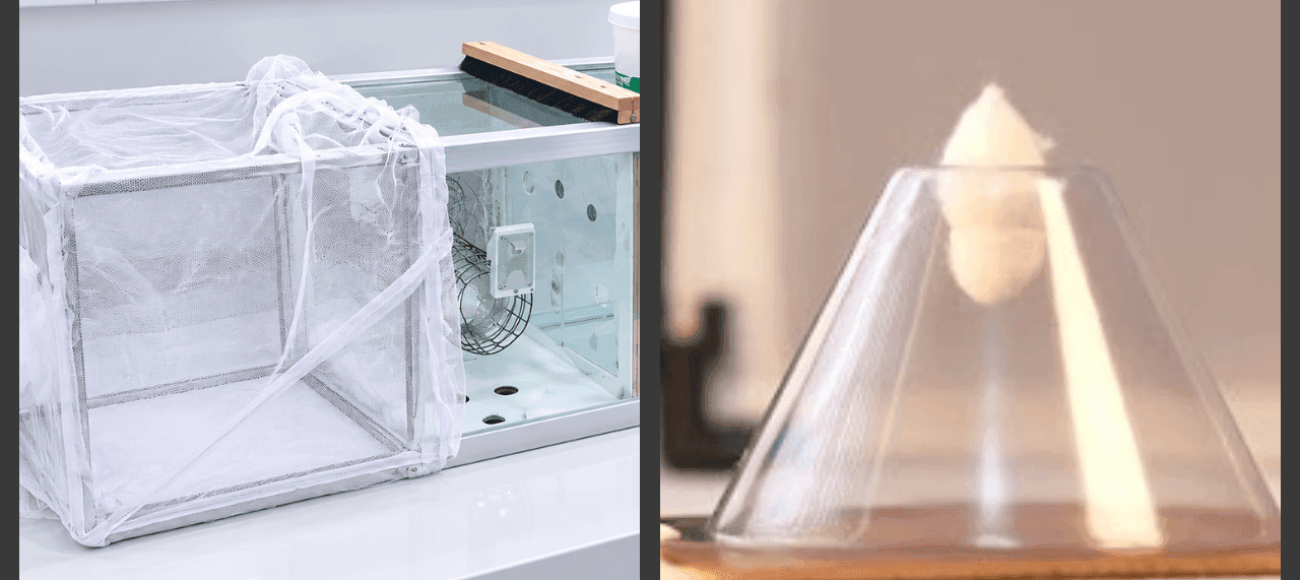
- WHO cones are fixed onto the treated material or surface.
- A specific number of live mosquitoes are introduced inside the cone for specific period
- Mosquitoes are transferred to paper cups containing with sucrose solution and kept under controlled conditions
- After a 24 h exposure period, mortality rates are observed to assess any delayed mortality.
What does the Who Cone test measure ?
Knockdown rate
Knockdown refers to mosquitoes becoming incapacitated after exposure to the treated surface.
Mortality rate
It measures how many knocked down mosquitoes die during the observation period.
Tunnel Test Method
Tunnel Test evaluates both insecticidal activity and mosquito behavior. To obtain a blood meal, mosquitoes must penetrate the treated meeting sample ( barrier). The test measures how effectively the material prevents feeding while also assessing mortality.
- In the tunnel Test, mosquitoes are released inside a glass tunnel chamber separated by a treated netting sample containing small holes.
- Blood feed source is placed at the opposite end to attract the mosquitoes
- Mosquitoes are released and allowed to interact with the treated net overnight
- After exposure, how many mosquitoes successfully penetrated the net, obtained a blood meal, survived, or died.
- Survived mosquitoes are then transferred to cups containing sucrose solution and mortality is assessed again after 24 hours.
Key endpoints measured
Blood-feeding inhibition
Ability of the treated material to prevent mosquitoes from successfully feeding.
Mortality
Mortality assessment helps determine whether mosquitoes die after contacting the treated barrier.
Role of host attraction and mosquito behavior
In Tunnel Testing, natural mosquito behavior is studied while evaluating the efficacy of insecticides. Unlike the who cone test, in tunnel tests direct contact with a treated surface is not forced, instead mosquitoes are allowed to move freely and search for a host attractant.
During the test, mosquitoes attempt to pass through the treated material to reach the bait. This helps to understand not only mosquitoes are killed, but also whether feeding attempts, penetration, and host-seeking behavior are reduced.
As a result, Tunnel Testing provides a more realistic assessment of how insecticide-treated products may perform under practical usage conditions.
WHO Cone Test vs Tunnel Test: Key Differences
| Parameter | WHO Cone Test | Tunnel Test |
| Exposure Type | Forced contact | Behavioral/free-flight exposure |
| Real-World Simulation | Limited | Higher |
| Result interpretation | Knockdown & mortality | Feeding inhibition & mortality |
| Test setup | Simple | More complex |
Regulatory Importance of WHO Cone and Tunnel Tests
WHO Cone and Tunnel Tests are internationally recognized bioassays widely used for vector control product evaluation.
- WHO recommendations for vector control products
WHO recommends standardized efficacy testing to support evaluation of insecticide-treated materials and mosquito control technologies.
- Importance in LLIN evaluation
Both cone and tunnel methods play an important role in assessing long-lasting insecticidal nets, particularly when evaluating durability and feeding inhibition.
- Supporting public health efficacy claims
Reliable laboratory efficacy data helps support product claims, regulatory submissions, and public health decision-making.
Need Help Choosing Between WHO Cone Test vs Tunnel Test?
At Microbe Investigations Switzerland (MIS) we conduct both WHO Cone Bioassays and Tunnel Tests to evaluate mosquito control products under laboratory conditions. Our entomology experts help manufacturers select the most suitable testing method for their product type, intended claims and regulatory requirements.
MIS supports efficacy validation of insecticide-treated nets, mosquito-repellent textiles, and vector control materials through scientifically designed mosquito bioassays.
For more information on who cone test and tunnel test, contact our experts here.
FAQS
1. What is the main difference between WHO Cone Test and Tunnel Test?
The Cone Test measures efficacy through direct mosquito contact, while the Tunnel Test evaluates mosquito behavior, feeding inhibition, and mortality under more realistic exposure conditions.
2. Does the WHO Cone Test measure feeding inhibition?
No. The Cone Test mainly measures knockdown and mortality after short exposure periods.
3. Why is the Tunnel Test more complex?
Tunnel test involves factors like free-flying mosquito behavior, host attraction, blood-feeding assessment, making it more complex.
4. Which mosquito species are commonly used in these tests?
Anopheles, Aedes, and Culex mosquitoes can be used depending on performance claims and regional regulatory requirements.
5. Are these tests important for insecticide-treated nets?
Yes. Both tests are widely used to evaluate efficacy of insecticide-treated mosquito nets.
6. Can WHO Cone Test and Tunnel Test be used for the same product?
Yes.
7. Is Tunnel Testing required for LLIN evaluation?
Tunnel testing is commonly used as part of WHO-recommended evaluation strategies for long-lasting insecticidal nets, especially when additional behavioral efficacy data is needed.
8. Can WHO Cone Test evaluate residual efficacy after washing?
Yes. Who cone test is used to assess residual insecticidal performance after washing or aging studies.